
Fluoride is a trace element necessary for humans, but its amount must be balanced. In small concentrations (0.5–1.5 mg/l), fluoride helps prevent tooth decay, but in larger amounts it has the opposite effect – it promotes damage to tooth enamel and can cause health problems. Under the Estonian drinking water standard, the permitted fluoride content is below 1.5 mg/l.
Boron is another naturally occurring element that can endanger human health when present in drinking water. Under the current requirements, the permitted boron content in drinking water is up to 1.5 mg/l.
If the amounts of fluoride or boron in drinking water exceed the standard values, reliable water treatment solutions are needed.
How are fluoride and boron removed from water?
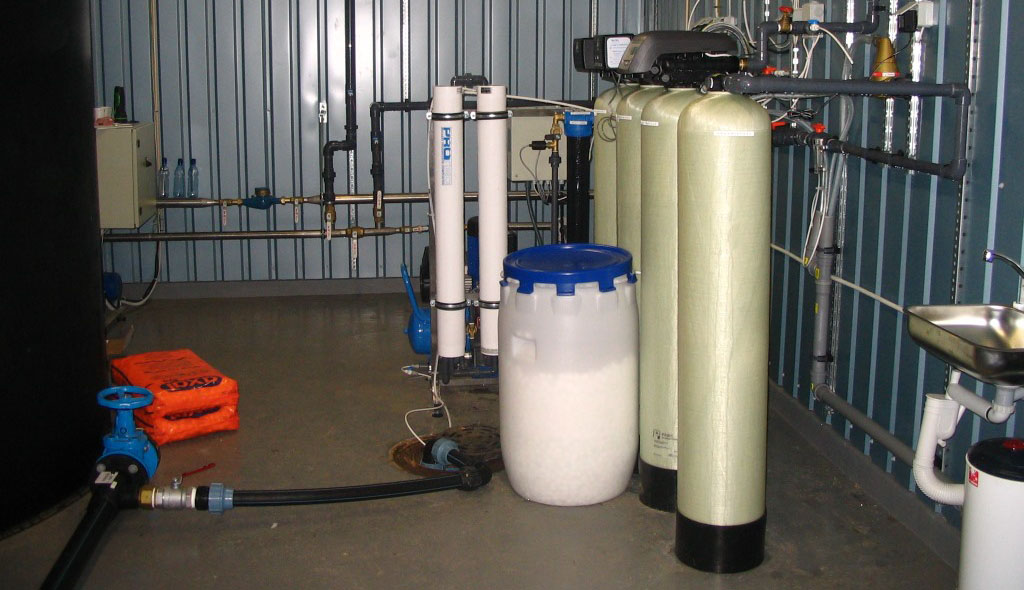
- The most effective method for reducing fluoride and boron is reverse osmosis.
- Part of the water intended for consumption is directed through a reverse osmosis unit.
- The purified water is blended with untreated water in a non-pressurized tank to achieve the desired concentration.
- A booster pump ensures that the blended water reaches the consumer at the right pressure.
- Such a solution is effective, environmentally friendly and reliable even at larger consumption volumes.
Removing fluoride and boron is especially important where water quality affects people or production processes. Water utilities must ensure that water that meets the standards and is safe for health always reaches the population. In industrial companies, excessive mineral content can directly affect the quality of production processes and the reliability of equipment. It is also critically important that clean drinking water is always available in educational and healthcare institutions, because there water quality is directly linked to people’s well-being and safety.
The advantages of Miridon’s solutions for business customers are that the purified water always meets the established standards – a safe fluoride and boron content is guaranteed. The systems are flexible and can be adapted to the specific consumption volume and water analysis results. In addition, they work automatically and need little maintenance, delivering a stable and reliable result. Because only part of the water is treated with reverse osmosis, the solution is also cost-effective – energy costs are lower and equipment life is longer.
