

Hard water often shows itself as whitish marks on taps and shower glass and as limescale in the kettle. A harder-to-notice but, in the long run, more important problem is limescale building up in boilers, washing machines, heating equipment and pipework. Water softeners are used to reduce the problems caused by hard water, and they in turn need quality water softener salt to work efficiently.
What is water softener salt actually needed for?
Water softener salt, also known as tablet salt or tableted filter salt, is high-purity salt used to restore the working capacity of the filter media in an ion-exchange water softener – in other words, for regeneration.
Water is softened by the ion exchange resin in the unit. The filter media binds mainly the calcium and magnesium ions that cause water hardness and replaces them with sodium ions. As a result, water hardness and limescale formation are reduced.
Over time, the ability of the ion exchange resin to bind calcium and magnesium decreases, and that is where water softener salt comes in. The brine that forms in the salt tank and is used to wash through the filter media regenerates, i.e. restores, the working capacity of the filter media so that the unit can continue softening water efficiently.
It is important to know that salt itself does not make water soft – the water is softened by the ion exchange filter, whose working capacity is restored with the help of the brine.
Which salt should you add to the softener?
When choosing water softener salt, it is worth looking at more than just the price. Quality salt tablets dissolve slowly and evenly, do not break down excessively and do not create unnecessary sediment in the brine tank. Even dissolving also helps prevent clogging of the unit’s suction system and the pipework.
The sodium chloride content of the water softener salt supplied by Miridon is at least 99.7%, and the content of insoluble particles is below 0.03%. High purity means less sediment in the brine tank and helps reduce the need for excessive maintenance.
It is not recommended to use ordinary table salt or dishwasher salt in a water softener. Their composition, crystal size or additives may not be suitable for a water softener and may disrupt the operation of the unit or damage the filter media.
How much water softener salt is used?
Salt consumption depends on water hardness, the amount of water consumed, the size of the unit, the softener settings and the regeneration frequency. The harder the water and the higher the water consumption, the more often the unit generally has to regenerate.
Depending on the unit’s settings, roughly 300 grams of salt may be used per litre of filter resin during one regeneration cycle. The water softening system itself determines the exact amount.
A home user should check the softener’s brine tank at least once a month and add salt tablets before the tank is completely empty. If the salt runs out, the unit cannot regenerate the ion exchange resin as required and the efficiency of water softening drops.
Soft water saves both time and equipment
The aim of softening water is not only to reduce visible limescale stains. Limescale also builds up in places you do not see every day – in pipework, boilers and the heating elements of household appliances.
Using soft water helps reduce limescale formation in water-using equipment and can thereby extend its service life and reduce the need for maintenance.
Everyday household tasks also become easier. Less limescale is left on taps, sinks and shower glass, so cleaning takes less time and fewer cleaning products. Soap and detergents also work better in soft water, so smaller amounts are needed.
The difference can also be noticed when washing – laundry comes out softer, and skin and hair no longer feel as dry and rough after washing.
Why is it important to know your water hardness?
To use a water softener efficiently and economically, you need to know how hard the water to be treated is. If the water hardness reading is not known, it is worth determining it before choosing or setting up the unit.
If the hardness is set too low, the unit may not soften the water enough. A value set too high, on the other hand, can cause unnecessarily frequent regenerations and increase both water softener salt and water consumption.
That is why, with a water softening solution, it is worth looking at the whole picture – water quality, consumption, the size of the unit, its settings and regular maintenance.
Water softener salt for homes, apartment buildings and businesses
Miridon has been working with water treatment solutions since 1997 and helps you choose a suitable water softening solution and salt for home users, apartment buildings and larger businesses alike.
A private household usually needs only a few bags at a time; for an apartment building or production company with higher consumption, it may be more convenient and practical to order a whole pallet.
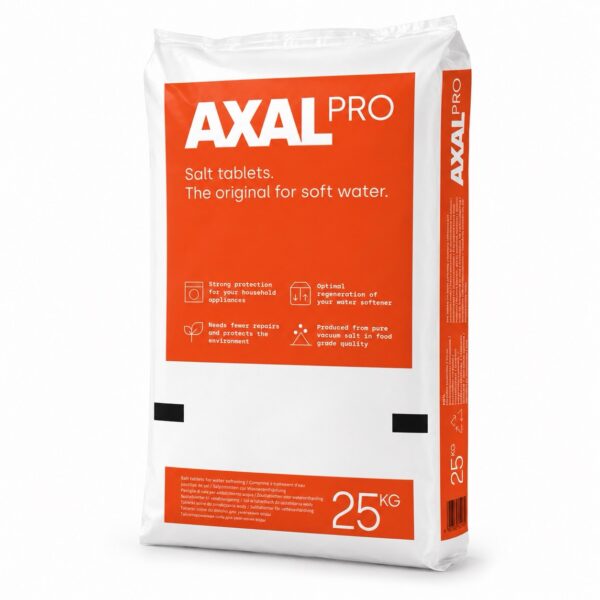
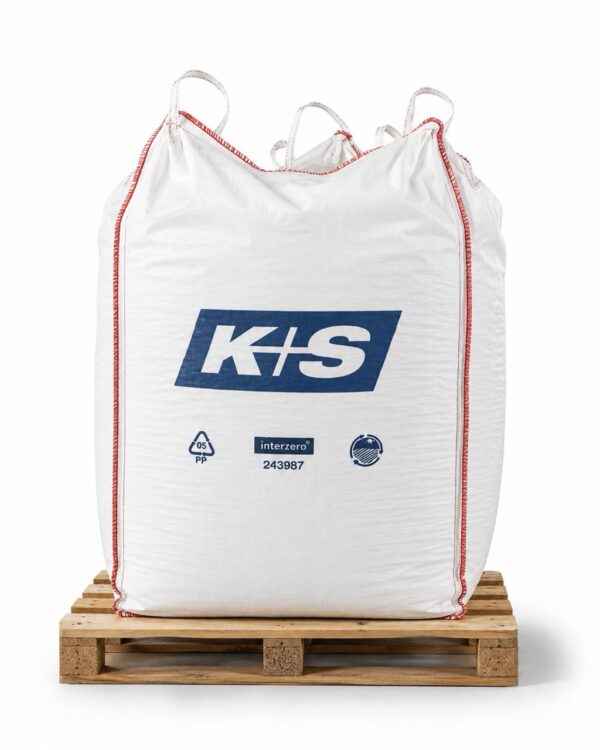
The range includes Regenit and AXAL-Pro water softener salt made in Germany in 25 kg bags and, for higher consumption, on 1000 kg pallets.
If you are not sure how much salt you need or which water softener salt suits your unit, we will help you choose the right product and quantity. If possible, include your water hardness reading and the water softener model in your inquiry – that way we can immediately recommend a solution that suits your specific system.
Water softener salt is always in stock at Miridon and can be delivered quickly across Estonia.